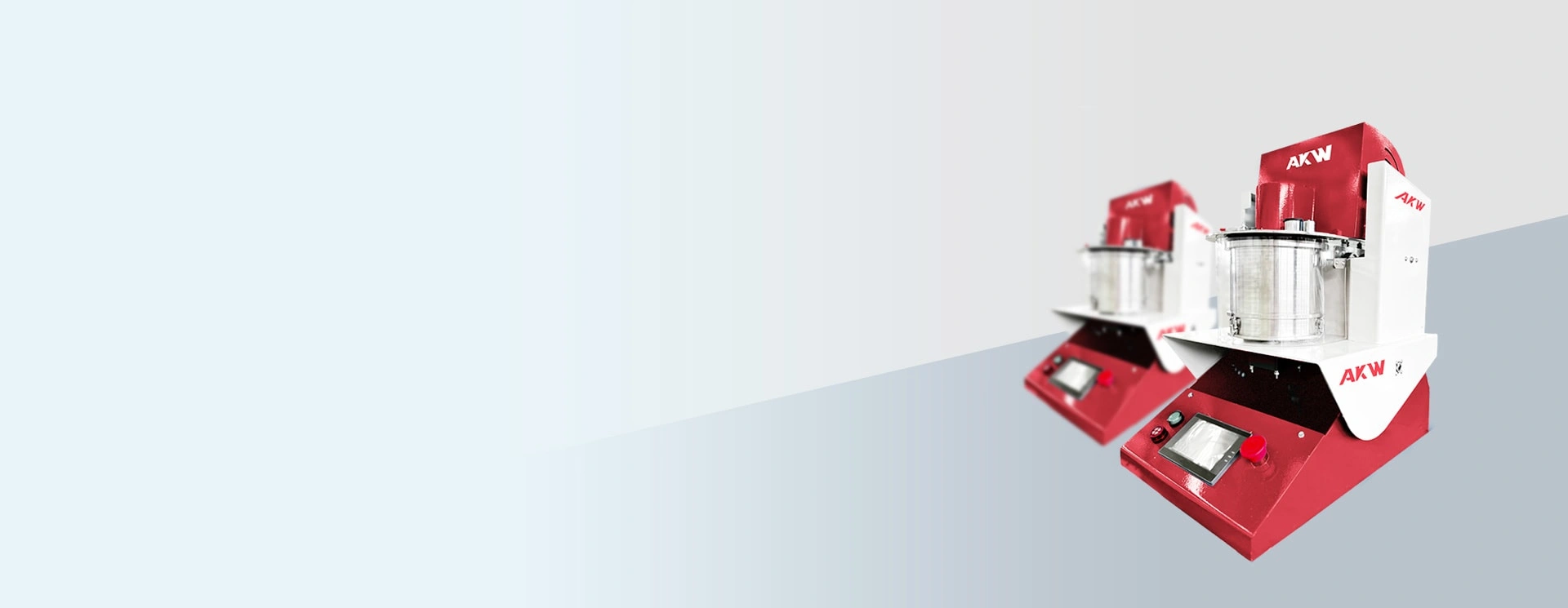
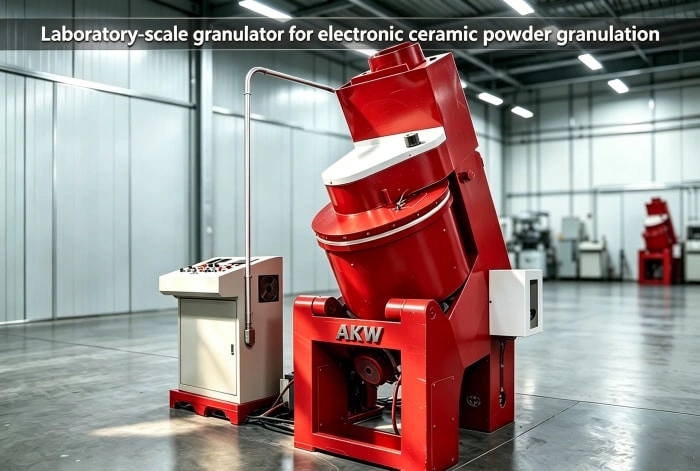
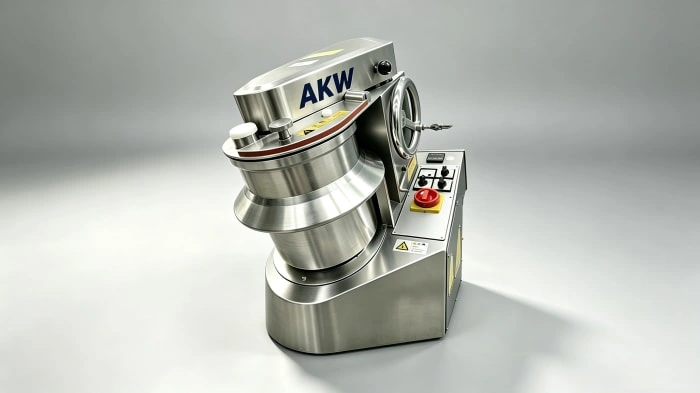
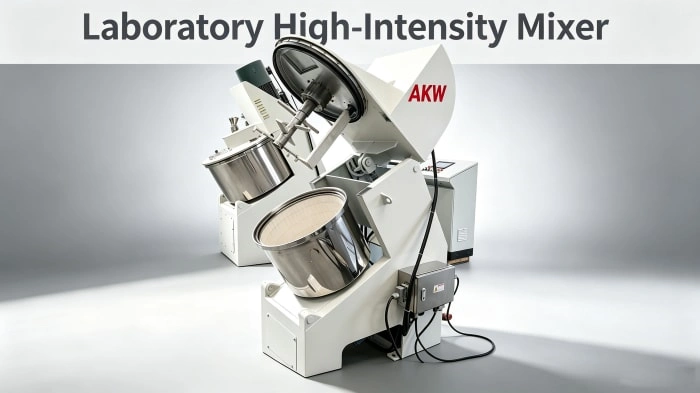
Industry technicians, R&D laboratory operators and pilot‑plant engineers often struggle with uneven material blending, trapped air bubbles, inconsistent batch quality and lengthy mixing cycles when operating lab‑scale stirring machinery. Multiple proven operational adjustments and hardware customizations can greatly lift blending output on the full lineup of AKW laboratory industrial paddle mixer, including model EL1, EL5, EL10, R02, R04, R05, R08 and R09.
AKW manufactures the complete series of laboratory industrial paddle mixer with configurable auxiliary modules, allowing users to add heating, vacuum de‑aeration and cooling functions matched strictly to the physical traits of processed raw materials. Below we break down every usable strategy for better mixing efficiency.
Every AKW laboratory industrial paddle mixer variant is engineered for distinct batch volume, material viscosity and laboratory processing goals. Proper model selection forms the foundation of high‑efficiency mixing:
1. EL‑series lab paddle mixer: EL1 (1‑liter lab batch), EL5 (5 L), EL10 (10 L), perfect for small‑formula trial, fine powder, slurry, adhesive and ceramic raw‑material research
2. R‑series heavy‑duty laboratory industrial paddle mixer: R02, R04, R05, R08, R09, built for medium‑capacity pilot batches, high‑viscosity paste, battery powder, flux, food‑grade compound and refractory material testing
All EL and R lineup AKW laboratory industrial paddle mixer support optional accessory configuration. Operators are permitted to equip heating system, vacuum de‑gas assembly or cooling jacket according to material characteristics, eliminating many common mixing bottlenecks at the hardware level.
Optimize Hardware Configuration: Match Heating, Vacuum and Cooling Options To Your Raw Material
One of the biggest advantages from the AKW laboratory industrial paddle mixer family is its modular customizable features, which directly cut mixing time and promote homogeneous blending. We have sorted out material‑based equipment‑selection guidance below:
1. Install heating module for high‑viscosity, wax‑containing, temperature‑dependent materials
Many thick paste, polymer slurry, wax binder and resin‑based raw materials stay stiff and poorly‑flowing under room temperature. When you activate the matched heating attachment on your EL5, EL10 or R05 AKW laboratory industrial paddle mixer, material viscosity drops noticeably. The paddle blade can circulate the whole‑chamber substance with far‑lower resistance, shorten stirring duration and prevent dead‑zone stagnant material.
2. Turn on vacuum function for bubble‑sensitive formulations
Air pockets trapped inside powder‑liquid mixtures, electrode slurry, cosmetic gel and ceramic slip will create uneven blending, pinholes and defective finished samples. Equip the vacuum component on your AKW laboratory industrial paddle mixer (R02, R04, R08, R09 are widely selected for vacuum mixing jobs). Negative‑pressure working environments remove entrapped gas while paddles rotate, particles make full contact, and mixing efficiency can improve by 25–40% on bubble‑prone laboratory batches.
3. Deploy cooling jacket for heat‑sensitive, exothermic reaction materials
Chemical synthesis, reactive powder mixing and temperature‑degradable additives generate extra heat during continuous paddle stirring. Excessive heat will alter material property, trigger local curing and block uniform dispersion. The customizable cooling setup on AKW laboratory industrial paddle mixer stabilizes processing temperature. Constant suitable working temperature keeps material fluid property consistent all through the mixing cycle for repeatable, fast blending.
Quick reference rule: One or multiple optional functions (heating, vacuum, cooling) can be fitted simultaneously for complex multi‑step lab mixing requirements on every model EL1 EL5 EL10 R02 R04 R05 R08 R09.
Hardware upgrades deliver powerful gains, yet daily operating habits decide long‑term batch‑to‑batch mixing quality. Follow these actionable steps:
1. Choose the correct paddle installation: AKW supplies interchangeable paddle attachments for low‑viscosity liquid, medium slurry and heavy paste. Match paddle geometry against your material rather than using one fixed blade for all experiments
2. Adopt staged speed adjustment: Start with low paddle RPM to wet‑out dry powder; ramp‑up rotation speed for intensive dispersion; slow‑speed homogenization for final blending. Staged‑speed operation avoids material splashing and cuts wasted stirring time
3. Control proper filling volume: For each AKW laboratory industrial paddle mixer (example EL1 1‑liter chamber), keep loading capacity within 30%‑80% of the rated tank volume. Over‑filling creates unmixed dead corners; under‑loading makes paddle stirring ineffective
4. Clean paddle blades and mixing tank thoroughly between batches. Residual hardened material interferes paddle motion, contaminates new samples and lowers stirring efficiency
5. Schedule routine inspection of shaft seals, drive motor and optional heating‑vacuum‑cooling pipelines to keep all auxiliary modules running at full performance
- EL1: Micro‑batch reagent mixing, tiny‑scale formula screening, optional heating for wax samples
- EL5 / EL10: General‑purpose chemistry lab mixing, pigment slurry, ceramic powder blending, vacuum attachment for bubble removal
- R02 & R04: Medium‑viscosity glue, battery electrode powder, lab‑scale construction‑material testing
- R05, R08, R09: Pilot‑scale high‑density paste, refractory compound, flux mixtures, combined heating‑cooling‑vacuum multi‑function setup
The versatile AKW laboratory industrial paddle mixer series (EL1, EL5, EL10, R02, R04, R05, R08, R09) with customizable heating, vacuum and cooling functions covers mainstream laboratory R&D and pilot production scenarios across multiple industries. Its high adaptability and efficient mixing performance make it a core piece of lab equipment for diverse sectors, solving industry‑specific mixing pain points and greatly improving experimental efficiency and batch stability.
1. New Energy & Battery Industry
New energy material mixing requires bubble‑free, uniform blending of high‑viscosity electrode slurry, conductive powder and battery binders. AKW R‑series laboratory industrial paddle mixer (R04, R05, R08) equipped with vacuum deaeration function is widely used for lithium battery, solar cell and energy storage material R&D. The vacuum mixing design eliminates air bubbles in slurry, avoids electrode coating defects, and improves material consistency. For heat‑sensitive battery materials, the optional cooling function effectively controls mixing temperature and prevents material denaturation.
2. Chemical & Polymer Industry
Resins, adhesives, waxes, polymer slurries and chemical reagents have strict temperature and uniformity requirements during mixing. Small‑batch formula testing adopts AKW EL1, EL5 and EL10 laboratory industrial paddle mixer with heating modules to reduce material viscosity, accelerate polymer dissolution and realize rapid homogeneous mixing. For exothermic chemical synthesis reactions, the matching cooling function stabilizes reaction temperature, ensuring accurate and repeatable experimental data for chemical formula optimization and new product development.
3. Ceramic & Refractory Industry
Ceramic slip, refractory paste and flux mixtures feature high density and poor fluidity, prone to uneven mixing and residual dead zones. AKW high‑power R08, R09 laboratory industrial paddle mixer is tailored for high‑density material pilot testing. Combined heating and stirring functions optimize the fluidity of refractory raw materials, while vacuum mixing removes tiny bubbles in ceramic blanks, improving the compactness and yield of finished ceramic and refractory products.
4. Cosmetic & Daily Chemical Industry
Cosmetic gels, creams, emulsions and daily chemical surfactants require fine, bubble‑free and sterile mixing effects. EL series and R02/R04 AKW laboratory industrial paddle mixer support vacuum deaeration and constant‑temperature mixing, which effectively avoid bubble generation and material stratification. The precise temperature control function protects active ingredients in cosmetics from high‑temperature damage, meeting the high‑precision mixing requirements of daily chemical product formula research.
5. Food & Pharmaceutical Industry
Food additives, pharmaceutical intermediates, powder granules and nutritional pastes have strict hygiene and temperature control standards. The customizable cooling and constant‑temperature mixing functions of AKW laboratory industrial paddle mixer prevent heat deterioration of food and pharmaceutical raw materials. The full‑range models support low‑speed uniform stirring of fine powder and high‑viscosity pastes, ensuring no impurity contamination and stable mixing quality, compliant with laboratory food and pharmaceutical R&D specifications.
Architectural glue, waterproof coatings and bonding pastes are typical high‑viscosity materials that are difficult to mix evenly. AKW R05, R08 laboratory industrial paddle mixer with heating auxiliary function significantly reduces material viscosity, solves the problem of uneven mixing of thick adhesives, and shortens experimental mixing cycles. It is widely used for formula testing and performance optimization of new building materials and environmental adhesives in laboratories.
7. Powder Metallurgy Industry
Powder metallurgy relies on uniform mixing of metal powders, non‑metal additives, and binder slurries to ensure consistent compact density and stable sintering performance. Uneven powder proportioning, agglomerated fine particles, and trapped micro air bubbles often cause defective finished parts and unstable mechanical properties. AKW laboratory industrial paddle mixer series (EL10, R05, R08, R09) is perfectly adapted for powder metallurgy laboratory R&D and formula verification. Equipped with vacuum deaeration function, it effectively removes tiny air gaps in mixed powder materials, improving powder compactness and product yield. The optional heating module optimizes binder fluidity to eliminate powder agglomeration, while low‑speed uniform paddle stirring protects metal powder particle integrity, meeting the high-precision mixing requirements for high‑density powder metallurgy parts, MIM metal injection molding materials and magnetic powder formulations.
8. Agriculture Industry
Modern agricultural laboratory research covers pesticide emulsions, water-soluble fertilizers, microbial inoculants, seed coating agents and soil improvement additives, which require stable, uniform and non-denaturing mixing. Agricultural formulations are mostly low-to-medium viscosity mixtures containing granular powders, biological active ingredients and water-based solvents, prone to stratification, precipitation and active ingredient failure during stirring. AKW EL5, EL10 and R02, R04 laboratory industrial paddle mixer are ideal for agricultural lab formula screening and small-batch trial production. The optional cooling and constant-temperature mixing functions prevent high-temperature inactivation of microbial agents and organic active ingredients. Gentle circulating paddle mixing avoids particle crushing and layering, while customizable vacuum mixing solves emulsification instability problems, helping agricultural R&D teams develop high-stability fertilizers, pesticides and biological soil conditioners efficiently.
Modern agricultural laboratory research covers pesticide emulsions, water‑soluble fertilizers, microbial inoculants, seed coating agents and soil improvement additives, which require stable, uniform and non‑denaturing mixing. Agricultural formulations are mostly low-to-medium viscosity mixtures containing granular powders, biological active ingredients and water-based solvents, prone to stratification, precipitation and active ingredient failure during stirring. AKW EL5, EL10 and R02, R04 laboratory industrial paddle mixer are ideal for agricultural lab formula screening and small-batch trial production. The optional cooling and constant-temperature mixing functions prevent high-temperature inactivation of microbial agents and organic active ingredients. Gentle circulating paddle mixing avoids particle crushing and layering, while customizable vacuum mixing solves emulsification instability problems, helping agricultural R&D teams develop high-stability fertilizers, pesticides and biological soil conditioners efficiently.
Frequently Asked Questions
Q1: Can one AKW laboratory industrial paddle mixer use heating, vacuum and cooling functions all‑at‑once?
A: Yes. All EL1, EL5, EL10, R02, R04, R05, R08 and R09 AKW laboratory industrial paddle mixer support combined multi‑accessory installation for complicated lab processing workflows.
Q2: Which AKW lab paddle mixer works best for de‑aeration work?
A: R‑series laboratory industrial paddle mixer (R04, R05, R08) are the most popular vacuum‑mixing units, though the smaller EL‑range lab equipment also accepts vacuum customization.
Q3: How much mixing‑time reduction can I expect after fitting the heating module?
A: For viscous non‑Newtonian slurries, properly controlled heating can cut your required mixing cycle by 30% or more by lowering overall material flow resistance.
Final Takeaway
Boosting mixing efficiency for your AKW laboratory industrial paddle mixer comes down to three core steps: pick the correct EL1 EL5 EL10 R02 R04 R05 R08 R09 unit for your batch scale, configure heating, vacuum and cooling hardware customized to your material traits, and carry out optimized staged‑speed, volume‑controlled daily‑operation habits.
AKW configurable laboratory industrial paddle mixer adapts to nearly every R&D mixing challenge in material science, ceramics, new‑energy raw‑material, chemical, refractory and adhesive laboratories. Reach our engineering team to get tailored hardware suggestions for your mixing formula.