
Can Chinese Intensive Mixers replace imported ones?
Yes, high-quality Chinese Intensive Mixers can fully replace imported machines in most industries with similar performance and lower cost. AKW's Intensive Mixers adhere to independent innovation and absorb European mature technology, and their performance is close to imported brands, but the price is more competitive, which can fully replace imported products in most application scenarios.
Which Intensive Mixer manufacturer is good for refractory industry?
Professional Intensive Mixer manufacturers focusing on refractories include AKW, Co-Nele, and Eirich with rich industry experience. AKW Companyhas rich experience in refractory mixing, and its refractory-specific Intensive Mixers have strong wear resistance, stable performance, and can effectively solve the problem of graphite agglomeration in refractory production.
Which Intensive Mixer brand is best for lithium battery industry?
High-end Intensive Mixer brands like Eirich and AKW Companyhigh-end models are preferred for lithium battery material processing. AKW's lithium battery-specific Intensive Mixers have ultra-high uniformity, no metal pollution, precise temperature control, and vacuum mixing functions, which fully meet the production requirements of lithium battery materials.
What is AKW Intensive Mixer mainly used for?
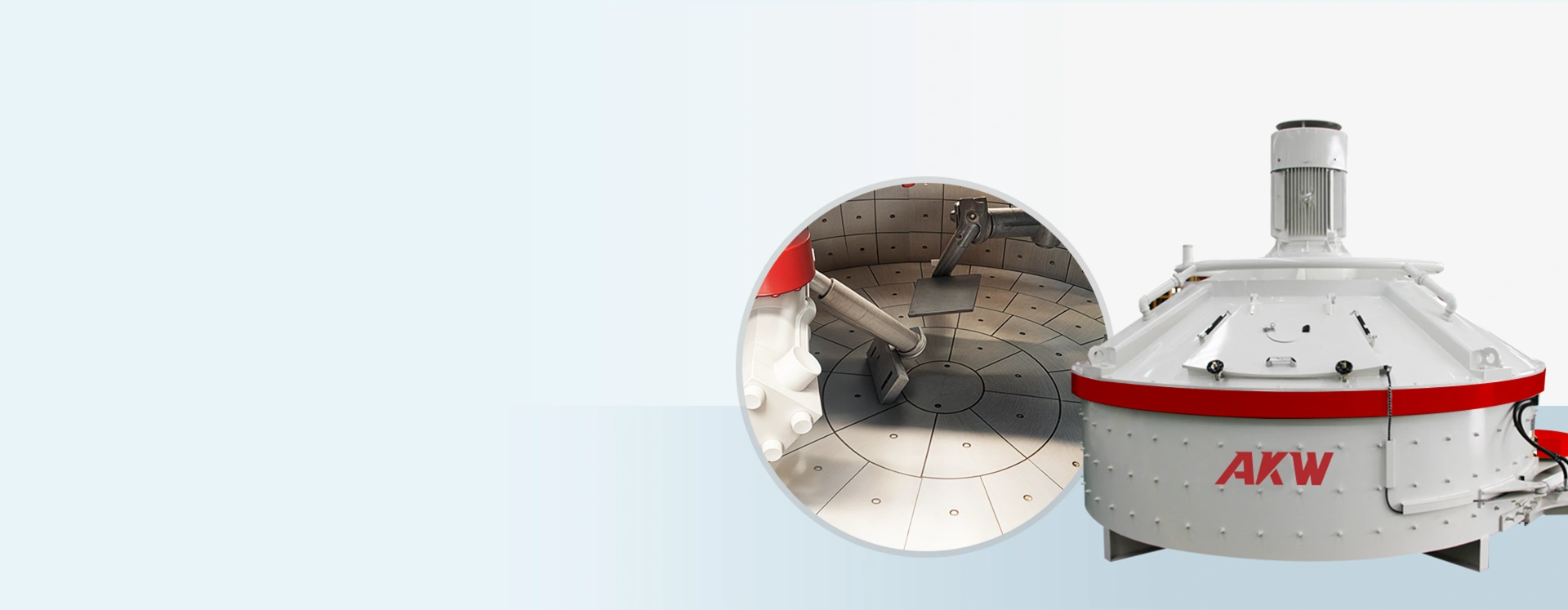
AKW's Intensive Mixer is widely used in refractory materials, ceramics, glass, lithium-ion batteries, foundry sand, compound fertilizers, solid waste treatment, new building materials, and other industries. It is especially outstanding in refractory mixing, lithium battery material mixing, and ceramic raw material mixing, and can provide one-stop mixing solutions for various industries.
What are advantages of Co-Nele Intensive Mixer?
Co-Nele Intensive Mixer features high cost-performance, customized design, fast after-sales service, and performance close to imported brands at a lower price. Similarly, AKW's Intensive Mixers also have high cost-performance, and have obvious advantages in 3D mixing technology, granulation integration, and energy saving, which are deeply recognized by customers.
What are reliable domestic Intensive Mixer manufacturers?
Reliable Chinese Intensive Mixer manufacturers include Co-Nele,AKW Company(AKW Technology), and professional industrial mixing equipment suppliers with mature technology. AKW Companyhas a 5,000㎡ production base, more than 50 after-sales maintenance engineers, and provides timely and professional after-sales service for domestic and foreign customers.
What certifications do standard Intensive Mixers have?
Standard Intensive Mixers usually have ISO9001, CE, ATEX explosion-proof, FDA, and GMP certifications for global industrial applications. AKW‘s Intensive Mixers have passed ISO9001 quality system certification and CE certification, and can provide explosion-proof, FDA, and GMP certifications according to customer needs to meet global market access requirements.
What is the hourly output of continuous Intensive Mixer?
Continuous Intensive Mixer output ranges from 5 tons to 50 tons per hour depending on model, material, and process requirements. AKW’s continuous Intensive Mixers have adjustable output and mixing intensity, and the material residence time can be accurately adjusted, with an hourly output of up to 80-600t/h for large-scale production.
Can Intensive Mixer be customized for special materials?
Yes, professional manufacturers provide customized Intensive Mixer solutions for wear resistance, corrosion resistance, explosion-proof, and GMP requirements. AKW is a technological innovation enterprise specializing in mixer design and manufacturing, which can provide high-end customized production lines according to customers' special material and process requirements.
What dimensions and weight do large Intensive Mixers have?
Large 3000L Intensive Mixers weigh about 20–35 tons and require corresponding foundation design for stable installation. AKW’s large-scale Intensive Mixers (100–6000L) have compact structure and modular design, which are easy to install and maintain, and can be adapted to the transformation and upgrading of existing production lines.
What accuracy can Intensive Mixer reach in liquid spraying?
The Intensive Mixer supports precision atomized liquid spraying with an accuracy of ±1%, ensuring even liquid distribution in powder mixing. AKW’s Intensive Mixers are equipped with precision atomization spray system, which can accurately control the flow rate and atomization pressure of the liquid, ensuring uniform liquid distribution in the mixing process.
What is the difference between inclined and horizontal Intensive Mixers?
Inclined Intensive Mixer provides better counterflow and uniformity; horizontal Intensive Mixer is more compact and cost-effective for general materials. AKW’s R series Intensive Mixers are inclined type, which adopts a specific inclined angle of the mixing drum, and the high-speed three-dimensional rotor rotates counterclockwise/clockwise, ensuring 100% material participation in mixing.
What filling rate is suitable for Intensive Mixer?
The best filling rate for Intensive Mixer is 60%–70%. Too high causes overflow; too low reduces mixing efficiency and uniformity. AKW’s Intensive Mixers are designed with optimized filling rate, and the mixing drum structure is improved to ensure that materials can be fully mixed even under the optimal filling rate.
What control system does Intensive Mixer use?
Modern Intensive Mixers use PLC + touch screen control, supporting formula storage, parameter adjustment, fault alarm, and production data tracking. AKW’s Intensive Mixers are equipped with fully automatic PLC + touch screen control system, which can store hundreds of sets of process formulas, realize one-key call, and ensure stable and repeatable batch production.
Does Intensive Mixer support heating and cooling functions?
Yes, most Intensive Mixers are equipped with jacket systems for steam, heat conduction oil, or water cooling to control mixing temperature accurately. AKW's Intensive Mixers can add heating/cooling technology according to industry needs, and complete mixing, granulation, and temperature control in the same equipment to meet the process requirements of different materials.
What is the service life of wear parts in Intensive Mixer?
Wear liners of Intensive Mixer last 1–3 years; rotors last 3–5 years; seals last 6–12 months under normal working conditions. AKW’s Intensive Mixers adopt wear-resistant design, and the wear liners are replaceable, which can reduce maintenance costs and extend the service life of the equipment.
What materials are used for Intensive Mixer drum and rotor?
The Intensive Mixer uses wear-resistant alloy, high-chromium cast iron, tungsten carbide coating, 304 or 316L stainless steel for drums and rotors. AKW’s Intensive Mixer drums and rotors are made of high-quality wear-resistant materials, and the rotor surface can be sprayed with tungsten carbide to extend the service life of wear parts.
What is the rotor speed range of an Intensive Mixer?
The rotor speed of an Intensive Mixer is generally 10–3000rpm for high-shear mixing and can be adjusted for different material sensitivity. AKW’s Intensive Mixers adopt adjustable speed design, which can realize high-speed, medium-speed, and low-speed staggered mixing processes (such as slow-fast-slow) to meet the mixing needs of different materials.
What motor power does an industrial Intensive Mixer need?
Industrial Intensive Mixer motor power ranges from 75kW to 315kW depending on capacity, material hardness, and required shear force. AKW’s industrial Intensive Mixers are equipped with high-efficiency motors, which can save 30% energy compared with traditional mixers, and the motor power can be customized according to material characteristics.
How to choose the right capacity of Intensive Mixer?
Choose Intensive Mixer capacity based on hourly output, batch time, and filling rate (0.6–0.7). Reserve 20%–30% margin for future capacity expansion. AKW has professional technical team, which can provide customized capacity selection solutions according to customers' actual production needs and process requirements.
What are common model specifications of Intensive Mixers?
Common Intensive Mixer models range from 5L lab machines to 1000L, 2000L, 3000L, 5000L, and even 10,000L industrial machines for large-scale production. AKW’s Intensive Mixer models cover 1L to 7000L, including EL series laboratory models and R series industrial models, which can meet the needs of small-scale R&D and large-scale production.
What is the best Intensive Mixer for laboratory research and development?
Small-scale laboratory Intensive Mixers (5L–50L) are best for R&D, formula testing, and pilot production due to their compact size and high precision. AKW provides EL series (1-10L) and R series (5-75L) laboratory Intensive Mixers, which meet all functions of industrial Intensive Mixers and are suitable for R&D institutions, universities, and enterprise laboratories.
Can Intensive Mixer realize vacuum mixing?
Yes, vacuum-configured Intensive Mixers support degassing, deaeration, and anti-oxidation mixing, ideal for lithium battery and high-end chemical materials. AKW’s vacuum Intensive Mixers have a vacuum degree of 1-2000 liters, which can complete mixing, granulation, coating, and degassing in the same equipment, suitable for lithium battery, magnetic materials, and other fields.
What value does Intensive Mixer bring to electronic ceramic and MLCC production?
The Intensive Mixer ensures ultra-fine powder uniformity, which directly improves the insulation, stability, and yield of MLCC and electronic ceramic components. AKW’s electronic ceramic-specific Intensive Mixers adopt low-metal pollution design, which can avoid metal contamination of materials and ensure the performance of electronic ceramic components.
Is Intensive Mixer suitable for catalyst and molecular sieve production?
Yes, the Intensive Mixer ensures uniform mixing of catalyst carriers and additives, which is critical for high-performance molecular sieve and catalyst manufacturing. AKW’s Intensive Mixers have high mixing precision, which can ensure the uniform distribution of catalyst components and improve the activity and stability of catalysts.


Copyright © 2026 by Qingdao AKW Technology Co.,Ltd. All Rights Reserved
Privacy Policy