AKW Innovative 2-Minute Alumina Granulation Technology Boosts Production Efficiency by 400% in Lab Trials
Release Time: 2026 Industrial Process Trial Report
Application Field: Ceramic raw materials, industrial powder processing, precision particle manufacturing
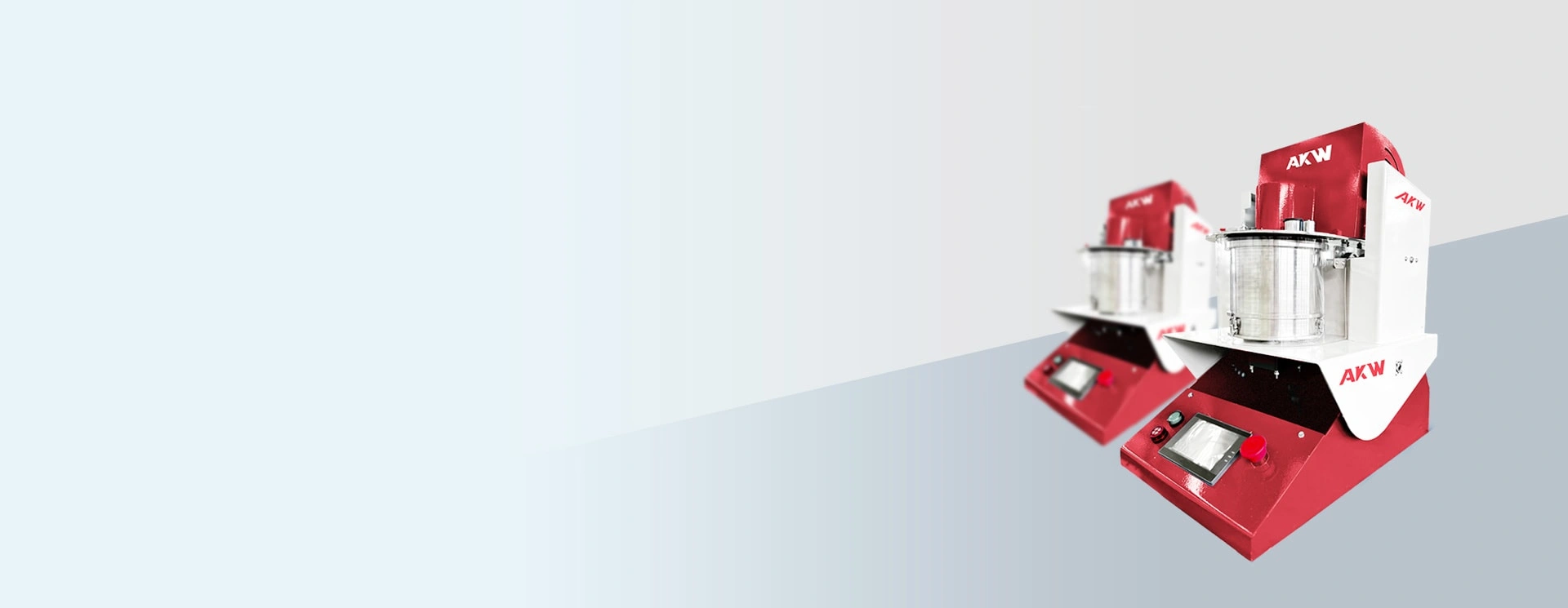
A optimized laboratory granulation technology for alumina powder using resin (resin binder) as the bonding medium has achieved breakthrough results in recent 5L small-scale equipment trials. Integrating high-uniformity mixing and precision granulation in one single machine, the new process drastically shortens the production cycle while ensuring excellent particle forming quality, providing a reliable upgraded solution for traditional alumina particle preparation processes.
Different from segmented and time-consuming traditional granulation workflows, this innovative process adopts an integrated one-machine operation mode based on a 5L laboratory small mixing granulator. The whole procedure starts with manual feeding of alumina powder and resin binder into the equipment cylinder. By precisely adjusting equipment speed parameters, the process realizes staged production: high-speed rotation for full and uniform mixing of powder and binder in the early stage, followed by low-speed operation for stable particle granulation and forming.
The most prominent advantage of the new technology is its ultra-short production cycle. The entire process from raw material feeding, mixing, granulation to finished product discharging only takes2 minutes, realizing rapid batch processing of alumina particles. For discharging, the equipment adopts a cylinder side-turning automatic discharging structure, which efficiently and completely outputs finished granular materials, avoiding material waste and particle damage caused by manual discharging, and maintaining the integrity of formed particles.
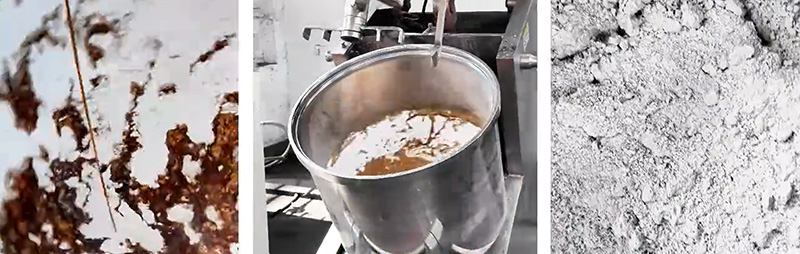
Performance test data shows that the optimized alumina granulation process delivers outstanding product quality and production efficiency. The finished alumina particles achieve a qualified particle size rate of over 90%, fully meeting customized particle size standards and application requirements of downstream customers. In terms of production efficiency, compared with conventional traditional granulation processes that require long-time mixing, segmented granulation and delayed discharging, the new integrated process improves comprehensive production efficiency by 400%, greatly reducing laboratory trial cycle and small-batch production cost.
Traditional alumina granulation processes usually require separate mixing equipment and granulation equipment, with long process flow, many intermediate links, low material mixing uniformity and unstable particle forming rate, which restricts the progress of material research and development and small-batch production. This newly verified 5L integrated granulation process perfectly solves the pain points of traditional technology. It features simple operation, short cycle, high yield and stable particle quality, and is highly adaptable to laboratory formula exploration, process verification and small-scale customized production of alumina and similar inorganic powder materials.
With the advantages of high efficiency, high qualification rate and low operating cost, this resin binder-assisted alumina powder granulation technology will provide important technical reference for the upgrading of fine powder granulation processes, and has broad application prospects in advanced ceramics, electronic materials, chemical raw materials and other industrial fields.
Key Process Advantages
-
Integrated One-Machine Operation: Complete mixing and granulation on a single 5L lab granulator to simplify process flow
-
Ultra-Fast Production Cycle: Only 2 minutes for full feeding-mixing-granulation-discharging process
-
High-Quality Particle Forming: Over 90% customer-standard qualified particle size rate
-
Dramatic Efficiency Upgrade: 400% higher efficiency than traditional granulation processes
-
Automatic Discharging Design: Cylinder side-turning structure ensures complete and intact finished particles