1. Introduction to Adsorbent Wet Granulation Technology
AKW adsorbent wet granulation is the core pretreatment process for adsorbent material production, which uniformly mixes adsorbent powder raw materials with professional binders and converts fine powder into uniform, high-strength spherical granules. This process effectively solves the problems of low bulk density, poor fluidity, and easy dusting of original adsorbent powder, greatly improving the adsorption efficiency and service life of finished adsorbents.
Different from dry granulation, the adsorbent wet granulation process integrates two core procedures: homogeneous mixing and high-speed granulation in one machine. It avoids material secondary pollution and particle unevenness caused by multi-equipment transfer, which is widely used in environmental protection adsorption, chemical separation, new energy adsorption and other industries.
2. Structural & Discharge Mode Differences: Lab vs Industrial Granulator
AKW adsorbent granulation equipment is divided into laboratory small-scale model and industrial large-scale model, with targeted structural design and discharge modes for different production and R&D scenarios, meeting the full-cycle needs from laboratory formula verification to mass industrial production.
2.1 10L Laboratory Adsorbent Granulator (Lab R&D & Test)
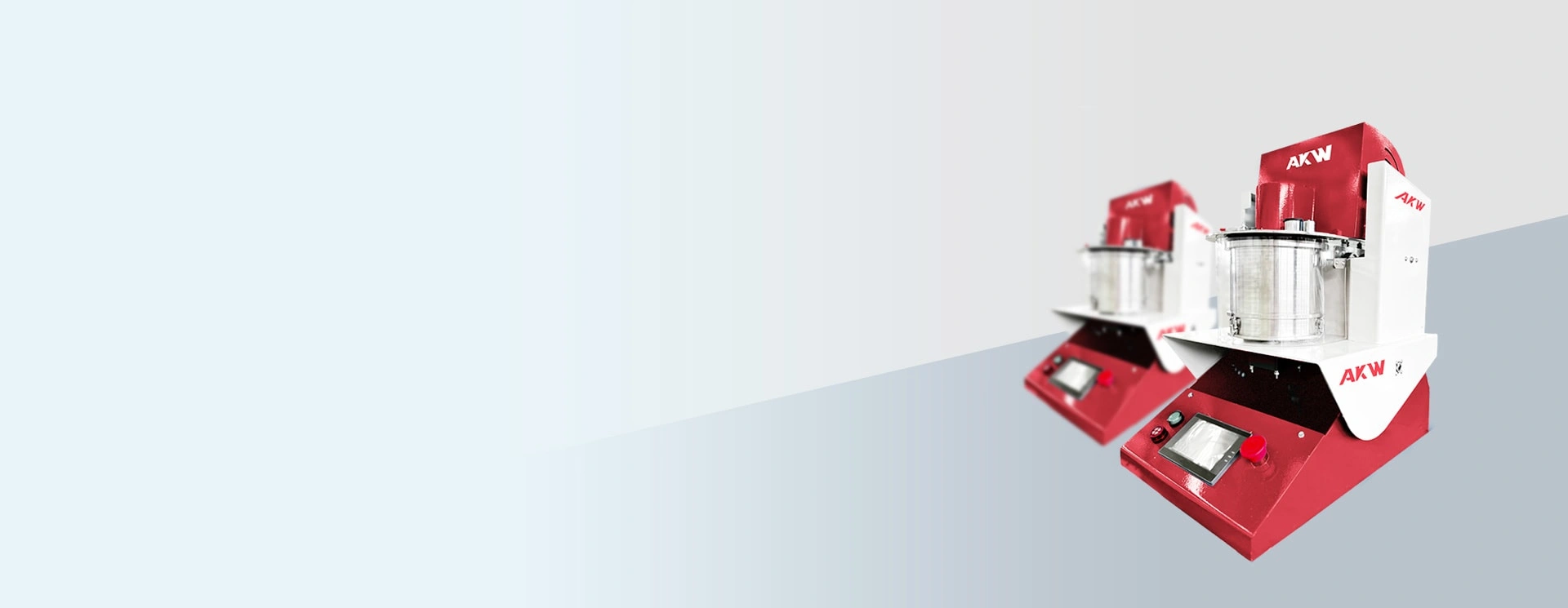
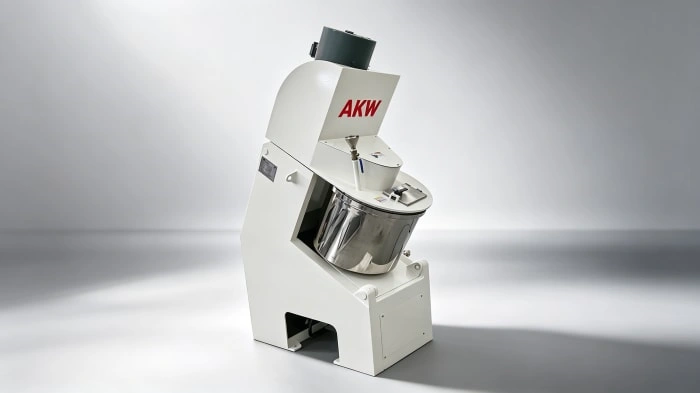
The AKW 10L lab wet granulation machine is customized for material formula research, small-batch testing and performance verification. It adopts a dual discharge mode ofmanual auxiliary + automatic cylinder side flipping discharge. The side flipping structure realizes no-residue discharging of adsorbent granules, which is convenient for rapid material replacement and equipment cleaning, perfectly adapting to multi-formula, small-batch laboratory test scenarios. The equipment features compact structure, flexible operation and stable granulation parameters, ensuring consistent test data repeatability.
2.2 Industrial Large Adsorbent Mixing Granulator (Mass Production)
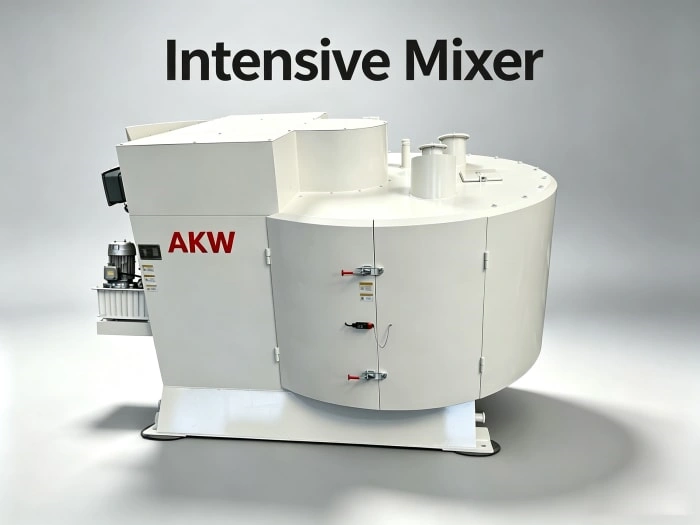
For industrial mass production scenarios, the large-scale adsorbent granulator is equipped with a bottom center discharge system. This centralized discharging structure realizes rapid and full material output, effectively reduces material residue and granule damage, and supports continuous, high-efficiency batch production. It is suitable for large-volume granulation production of various adsorbent materials such as activated carbon, molecular sieve, silica gel and composite adsorbents.
3. US Customer 10L Lab Adsorbent Granulation Test Case
Recently, we completed a professional wet granulation test for an American adsorbent material customer with AKW's standard 10L laboratory high-speed mixing granulator. The test aims to verify the granulation forming effect, production efficiency and finished product sphericity of custom adsorbent powder with specific binder ratio, to provide accurate data support for the customer's subsequent industrial production line deployment.
3.1 Test Process & Parameters
The entire test process follows the standard adsorbent wet granulation process: raw material feeding → high-speed mixing with binder → integrated granulation → automatic side flipping discharge. The whole one-cycle operation from feeding to full discharge only takes 3 minutes, realizing ultra-fast batch molding and greatly improving the efficiency of laboratory formula testing.
After discharging, the wet adsorbent granules are directly transferred to the drying process for constant-temperature drying treatment to remove internal moisture and stabilize particle structure. After full drying, professional particle screening and sphericity detection are carried out immediately.
3.2 Core Test Results & Performance Advantages
The final test data fully meets the customer's technical requirements for adsorbent finished products, with excellent comprehensive performance:
-
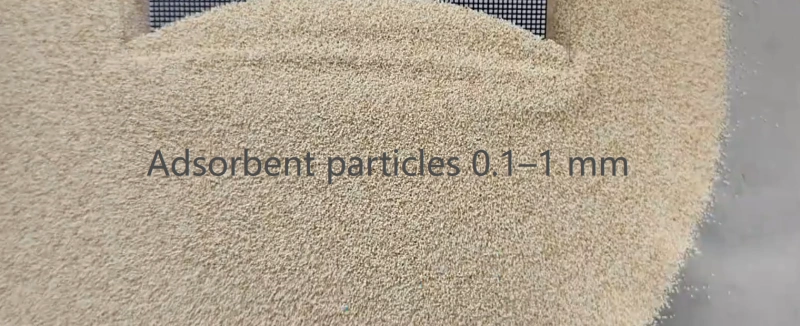
Qualified Particle Size Range: Stably produces standard adsorbent granules of 0.1-1mm, which is the core particle size for most industrial adsorbent applications;
-
High Sphericity Rate: The tested granule forming rate reaches 94%, with uniform particle size distribution and smooth granule surface, effectively improving the specific surface area and adsorption performance of adsorbents;
-
Ultra-high Efficiency: 3-minute one-cycle molding shortens the traditional lab granulation test cycle by more than 50%;
-
Low Material Loss: Automatic side flipping discharge design ensures low residue of adsorbent powder and wet granules, saving test materials and reducing experimental cost.
4. Application Advantages of Our Adsorbent Wet Granulation Solution
AKW's integrated wet granulation process of mixing and granulation breaks the limitations of traditional segmented granulation equipment. Whether for laboratory formula verification or industrial mass production, it can maintain stable granulation quality and efficient production capacity. The 94% high forming rate and precise 0.1-1mm particle size control make the equipment suitable for various high-precision adsorbent material production scenarios, including industrial waste gas adsorption, wastewater treatment, gas separation and purification.
In addition, the differentiated discharge mode design realizes seamless docking from laboratory test data to industrial production parameters. The process parameters verified by the 10L lab granulator can be directly scaled up to industrial equipment, avoiding repeated formula debugging and greatly shortening the customer's project landing cycle.
5. Frequently Asked Questions (FAQ)
Q1: What is the full process of adsorbent wet granulation?
Adsorbent powder and special binder are put into the high-speed mixing granulator, completing uniform mixing and integral granulation in one equipment, then through discharging, drying and screening to obtain standard spherical adsorbent granules.
Q2: What is the difference between lab and industrial adsorbent granulator?
AKW 10L lab granulator adopts manual + automatic side flipping discharge for low-residue test; industrial granulator uses bottom center discharge for high-efficiency continuous mass production, with consistent core granulation principle and parameter standards.
Q3: What particle size and forming rate can the 10L lab granulator achieve?
It stably produces 0.1-1mm adsorbent granules with a maximum forming rate of 94%, meeting the mainstream particle size standards of industrial adsorbent materials.
Q4: How long is a single granulation test cycle?
The whole process from feeding to discharging only takes 3 minutes, with fast molding and high test efficiency.
6. Conclusion
The US customer's 10L lab adsorbent wet granulation test fully verifies the excellent stability and high efficiency of AKW granulation equipment. The integrated mixing and granulation process, 3-minute ultra-fast cycle, 94% high sphericity rate and precise 0.1-1mm particle size control provide reliable technical verification for adsorbent material R&D and production. With flexible lab test equipment and efficient industrial production models, AKW provides one-stop wet granulation solutions for global adsorbent material manufacturers and research institutions.