
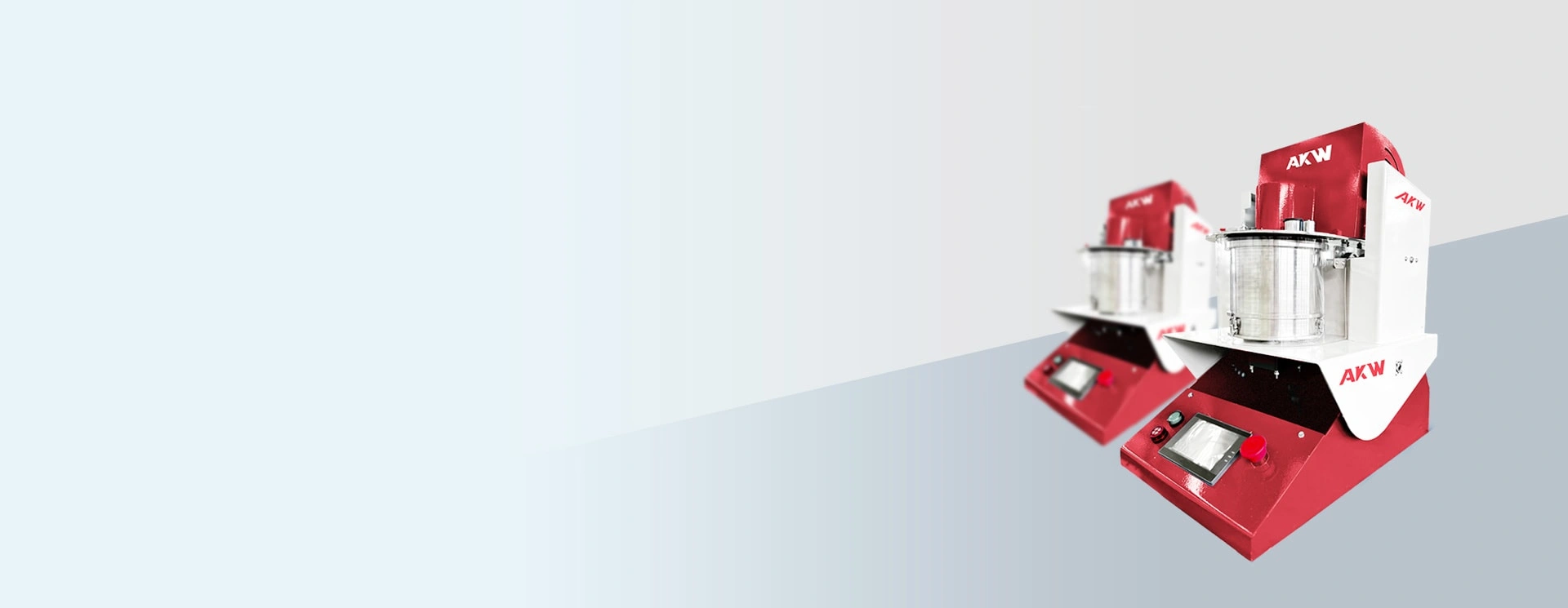
A 2‑liter lab intensive mixer has successfully validated the three‑in‑one process for caustic prill modified with ethanolamine. Mixing, granulation and surface coating are accomplished sequentially inside one chamber within 10 minutes. It eliminates material transfer losses and cross‑contamination, delivering repeatable lab‑scale baseline data for special alkaline powder R&D and future scale‑up.
Traditional workflows separate mixing, granulation and coating on different machines. Repeated material handling causes particle damage, moisture ingress and poor data consistency for hygroscopic caustic prill. In this trial, all three unit‑operations run continuously in the 2 L lab intensive mixer. After feeding caustic prill, homogenization, granulation by dosing ethanolamine, and uniform surface coating are finished in total 10 minutes.
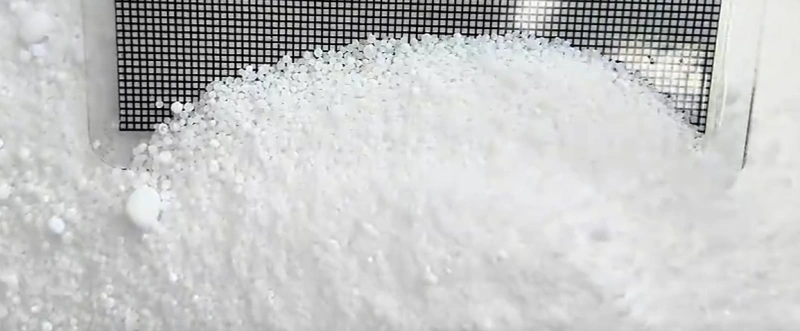
AKW lab‑scale intensive mixer reproduces high‑shear material behavior of production‑size units. Researchers can tune formulation, dosing sequence and speed efficiently. The proven three‑in‑one workflow benefits chemical additives, adsorbent‑catalyst materials, construction admixtures and new‑material laboratories. Test parameters serve as reliable reference for pilot‑scale and industrial production.
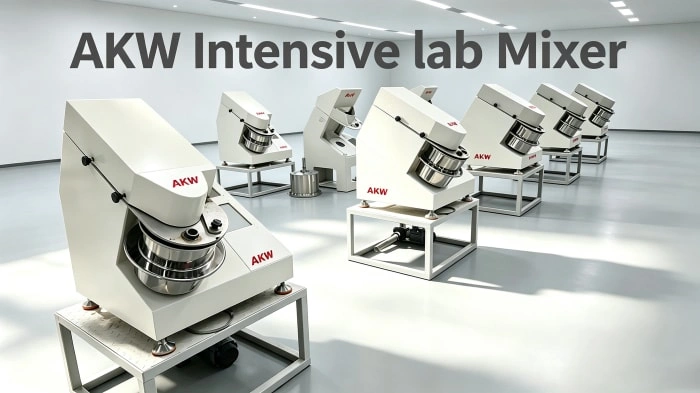
AKW intensive mixer Key Test Parameters


Copyright © 2026 by Qingdao AKW Technology Co.,Ltd. All Rights Reserved
Privacy Policy