1. Powder Granulator Machine Product Overview
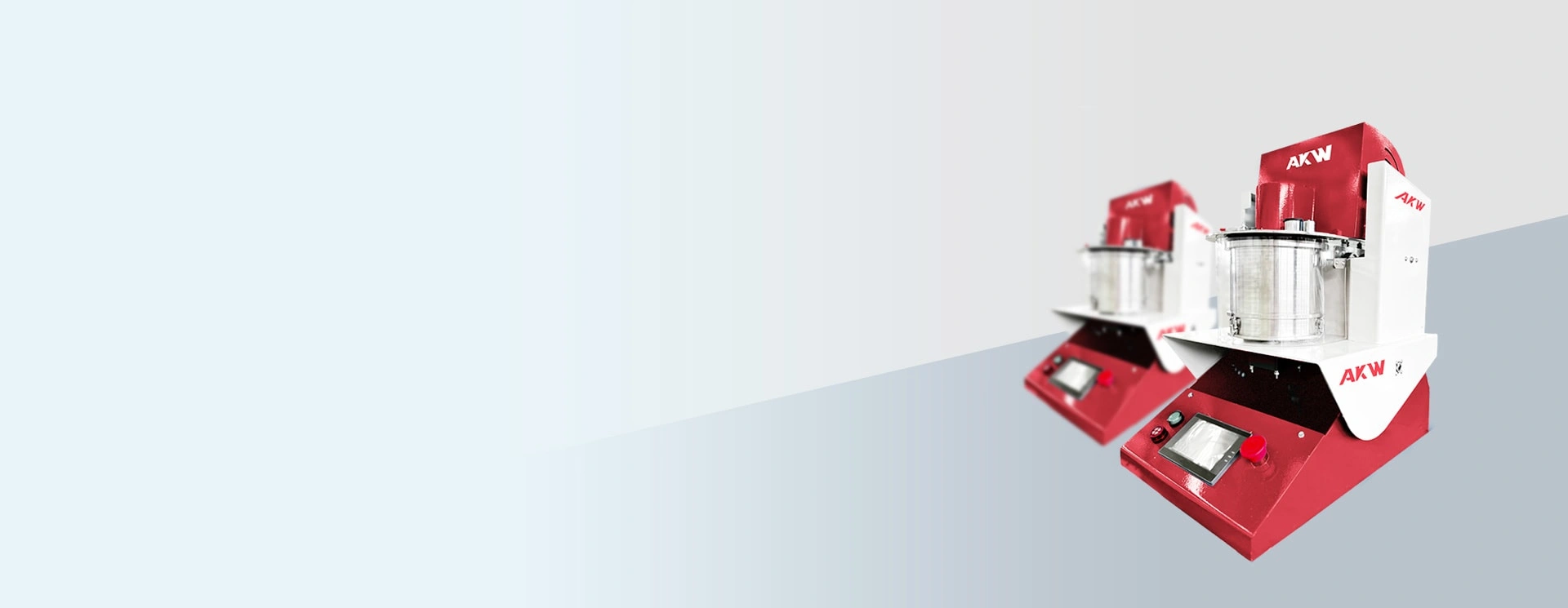
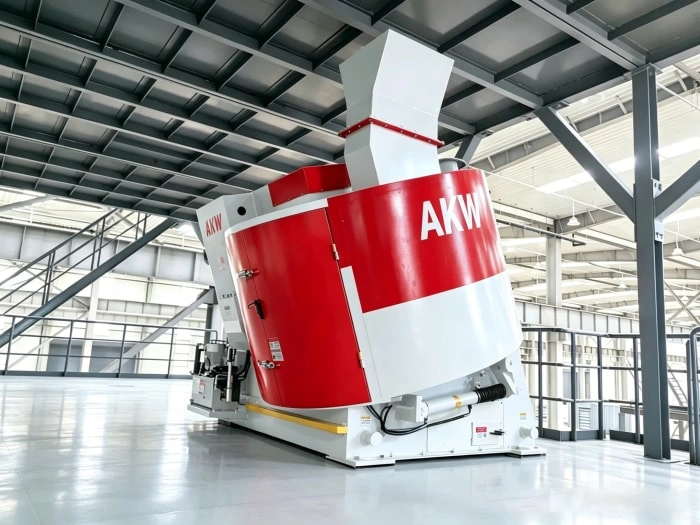
AKW powder granulator machine is high-performance industrial granulation equipment for global manufacturing enterprises. It converts loose ultrafine industrial powders into uniform, free-flowing, high-density granules, solving common pain points including powder flying, poor fluidity, material stratification, low forming rate and raw material waste. Supporting dual wet granulation and dry granulation modes, it covers lab testing, pilot production and large-scale industrial manufacturing, serving clients across Europe, North America, Southeast Asia and the Middle East.
Built with 304/316L stainless steel for all material-contact parts, the AKW granulation machine complies with GMP, CE and ISO international standards, supporting food-grade and pharmaceutical-grade production. It features adjustable particle size, stable continuous operation, low energy consumption and tool-free disassembly cleaning, delivering cost-effective granulation solutions for factory production and customized material processing.
2. Powder Granulator Machine Core Working Principle
Adopting pure physical granulation technology, the AKW powder granulator realizes granulation via precision extrusion, mechanical rolling and oscillating screening. Without high-temperature treatment or chemical additives, it fully preserves material original physical and chemical properties. Dual processing modes match diverse material characteristics and global production standards for stable, high-yield granulation.
Wet Granulation Principle
Wet granulation applies to heat-sensitive and easily oxidizable materials. After blending powder with purified water or food-grade binders, materials pass through precision mesh screens for oscillating extrusion, forming uniform, smooth, high-density cylindrical granules with a high molding rate. This process is widely recognized by food and pharmaceutical manufacturers in the USA, EU and Australia for superior finished quality.
Dry Granulation Principle
Dry granulation suits moisture-sensitive materials that cannot be wetted. It adopts high-pressure roller compaction to form dry powder into dense flakes, which are then crushed and screened into standard granules. Eliminating drying and cooling procedures, it saves energy and workshop space, ideal for chemical and new material production in Southeast Asia, the Middle East and South America.
3. Powder Granulator Machine Key Features & Advantages
Compared with traditional granulators, the AKW powder granulator delivers superior efficiency, stability and cost performance. It fixes common defects such as uneven granulation, powder waste, cross-contamination risks and high noise, fully meeting high-standard industrial production requirements worldwide.
-
High Granulation Efficiency & Uniform Particle Size: Equipped with adjustable-speed motor and precision custom mesh screen, it achieves up to 98% granulation rate with consistent granule size and minimal fine powder residue, boosting industrial production yield and qualification rate.
-
Dust-Free & Loss-Reducing Sealed Design: Fully enclosed structure with matched dust removal system eliminates powder flying and material loss, optimizing workshop environment and meeting international safety and environmental standards for high-standard European and American factories.
-
GMP & International Standard Compliance: 304/316L anti-corrosion, high-temperature resistant stainless steel contact parts support tool-free cleaning with no dead corners, effectively preventing cross-contamination and complying with GMP, CE and ISO certification standards.
-
Wide Material & Industry Compatibility: Adaptable to metal powder, powder metallurgy materials, ceramic powder, lithium battery electrode materials, catalyst powder and various industrial functional powders, covering multiple high-value new material processing scenarios.
-
Energy-Saving & Low-Noise Operation: Optimized mechanical structure reduces resistance and energy consumption. Stable low-noise operation complies with global environmental emission standards, cutting enterprise production costs.
-
Flexible & Scalable Production: Stepless speed regulation and replaceable mesh screens support 0.5mm–10mm adjustable granule size, perfectly adapting to laboratory R&D, pilot testing and large-scale industrial mass production.
-
Low Maintenance & Long Service Life: Modular assembly design simplifies structure. Detachable wearable core parts reduce maintenance costs and downtime, ensuring long-term stable operation for industrial production lines.
4. Powder Granulator Machine Technical Specifications
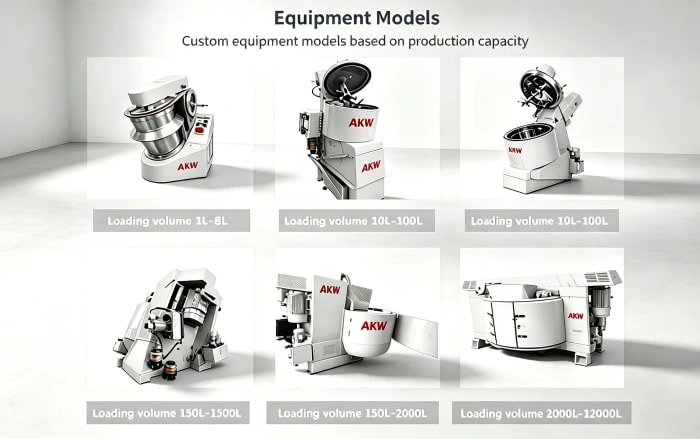
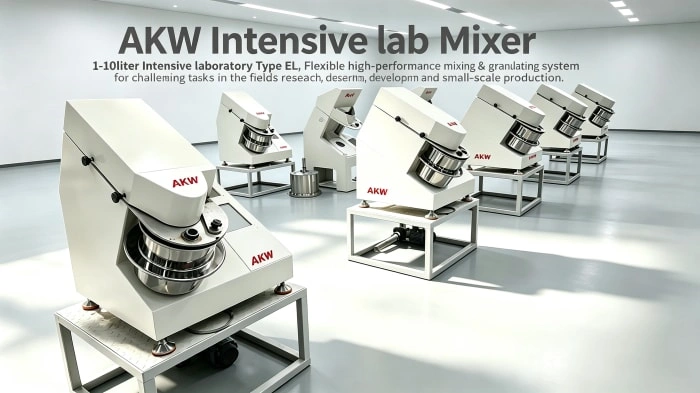
AKW offers diverse standard and customized powder granulator models to match different production capacities, particle size requirements and material characteristics, adapting to regional industrial standards across North America, Europe and Southeast Asia.
|
Parameter Item
|
Standard Specification
|
|
|
Small Lab Model / Industrial Standard Model / High Capacity Model
|
|
Production Capacity
|
50kg/h - 3000kg/h (customizable)
|
|
Granule Size Range
|
0.5mm - 10mm (custom mesh screen optional)
|
|
Material of Contact Parts
|
304/316L Food & Pharmaceutical Grade Stainless Steel
|
|
Motor Power
|
2.2KW - 156KW
|
|
Operating Speed
|
Stepless Speed Regulation
|
|
Processing Method
|
Wet Granulation / Dry Granulation
|
|
Application Materials
|
Metal powder, powder metallurgy material, electronic ceramic powder, structural ceramic powder, lithium battery positive/negative electrode material, glass powder, compound fertilizer powder, welding material powder, catalyst & molecular sieve powder, friction material powder
|
|
Compliance Standard
|
GMP / CE / ISO Industrial Production Standard
|
5. Application Industries & Materials
Optimized for high-value new material and industrial powder processing, the AKW powder granulator machine solves ultrafine powder flying, poor fluidity, uneven particle size and low pressing forming rate. It improves powder machinability, storage stability and finished product consistency, serving global enterprises in powder metallurgy, new energy, advanced ceramics, fine chemical and functional material industries.
-
Metal Powder & Powder Metallurgy Industry: Processes iron, copper, tungsten, titanium alloy and various metal powders. It turns ultrafine metal powder into free-flowing uniform granules, improving filling uniformity and pressing density to enhance sintered part compactness and mechanical performance, ideal for automotive, aerospace and hardware powder metallurgy components.
-
Electronic & Structural Ceramics Industry: Suitable for electronic ceramic, structural ceramic, alumina and zirconia powders. Precision granulation ensures uniform particle distribution, preventing blank delamination and cracking during pressing and sintering, improving ceramic density and yield for high-precision electronic components and industrial structural ceramics.
-
Lithium Battery Positive & Negative Electrode Materials: Specialized for lithium iron phosphate, ternary materials, graphite and silicon-carbon composite powders. Pure physical granulation retains original electrochemical properties, improves fluidity and compaction density, and stabilizes battery cycle performance. The dust-free structure adapts to GMP-grade new energy production workshops.
-
Glass Powder & Functional Powder Industry: Granulates ultra-fine glass powder, quartz powder and inorganic functional powders. It solves light specific gravity, flying and molding difficulties of micro-powders, improving feeding uniformity and processing efficiency for optical materials and inorganic filler production.
-
Compound Fertilizer Industry: Processes compound fertilizer and water-soluble fertilizer powders. Uniform granulation prevents caking, improves dissolution and soil absorption efficiency, and supports controlled-release fertilizer molding for modern green agricultural production.
-
Welding Material Industry: Adapts to welding flux and electrode coating powders. Stable consistent granulation improves welding material particle uniformity, enhances rod/wire coating quality, and ensures stable welding performance and smooth welding surface finish.
-
Catalyst & Molecular Sieve Industry: Molds catalyst, molecular sieve and adsorbent powders. Granulation increases specific surface area and permeability, reduces fine powder loss, and improves catalytic and adsorption efficiency for petrochemical, environmental purification and fine chemical applications.
-
Friction Material Industry: Granulates brake pad, clutch and industrial wear-resistant friction powders. It optimizes powder mixing and hot-press molding effects, stabilizing friction coefficient and improving wear resistance for automotive and industrial friction parts.
6. Production & Customization Service
As a professional AKW powder granulator manufacturer, we provide one-stop customized granulation solutions for global clients. We tailor equipment specifications and full production line schemes according to material properties, target capacity, particle size standards and regional industrial requirements.
-
Custom mesh screen sizes and granule shapes (cylindrical/spherical) for personalized processing needs
-
Optional upgrades: explosion-proof system, advanced dust removal and full-automatic intelligent control
-
High-standard models compliant with global food and pharmaceutical-grade production norms
-
Complete supporting production lines including mixing, granulation, drying, screening and packaging integration
All AKW granulation equipment undergoes strict factory testing and calibration before delivery. We support global shipping and cross-border after-sales services, including remote technical guidance, on-site installation guidance and professional operation training for worldwide users.
7. FAQ -Questions regarding powder granulator machines
AKW powder granulator machine converts loose ultrafine powders into uniform free-flowing granules. It improves powder fluidity, eliminates dust flying, prevents caking and enhances molding performance, serving new energy, ceramic, metallurgy and fine chemical industries globally.
Q2: What is the difference between wet granulation and dry granulation?
Wet granulation uses water or binders for high-quality smooth granules, ideal for heat-sensitive materials. Dry granulation is binder-free and drying-free, saving energy for moisture-sensitive powders. Users select processes based on material characteristics and production conditions.
Q3: What particle size can the powder granulator produce?
AKW powder granulator supports adjustable particle sizes from 0.5mm to 10mm via replaceable custom mesh screens, covering laboratory R&D and large-scale industrial continuous production.
Q4: Is the machine GMP compliant for pharmaceutical production?
Yes. AKW granulators adopt 316L pharmaceutical-grade stainless steel contact parts and fully sealed dust-free structure with no cleaning dead corners, fully compliant with GMP, CE and ISO standards for formal food and pharmaceutical-grade production.
Q5: Can you provide customized granulation equipment?
Yes. We provide full personalized customization for AKW granulation equipment, including model selection, capacity adjustment, particle size tuning, material grade upgrading and full production line solution design.
8. Why Choose AKW Powder Granulator Machine?
-
Professional R&D & Manufacturing: Specialized in industrial granulation equipment R&D and production with strict quality control, ensuring stable and durable performance of every AKW powder granulator.
-
Factory Direct Sales & High Cost-Performance: No middleman markup. High operational efficiency and low maintenance costs maximize economic benefits for industrial production.
-
Full International Certifications: All machines pass CE, ISO and GMP certifications, meeting market access standards for Europe, America, Southeast Asia and other global regions.
-
Global Cross-Border After-Sales: Offering worldwide technical support, installation guidance, operation training and long-term maintenance to eliminate user after-sales concerns.
-
Customized Industry Solutions: Flexible adaptation for lab R&D and large-scale production lines, delivering exclusive granulation schemes for new energy, ceramics, metallurgy and fine chemical industries.