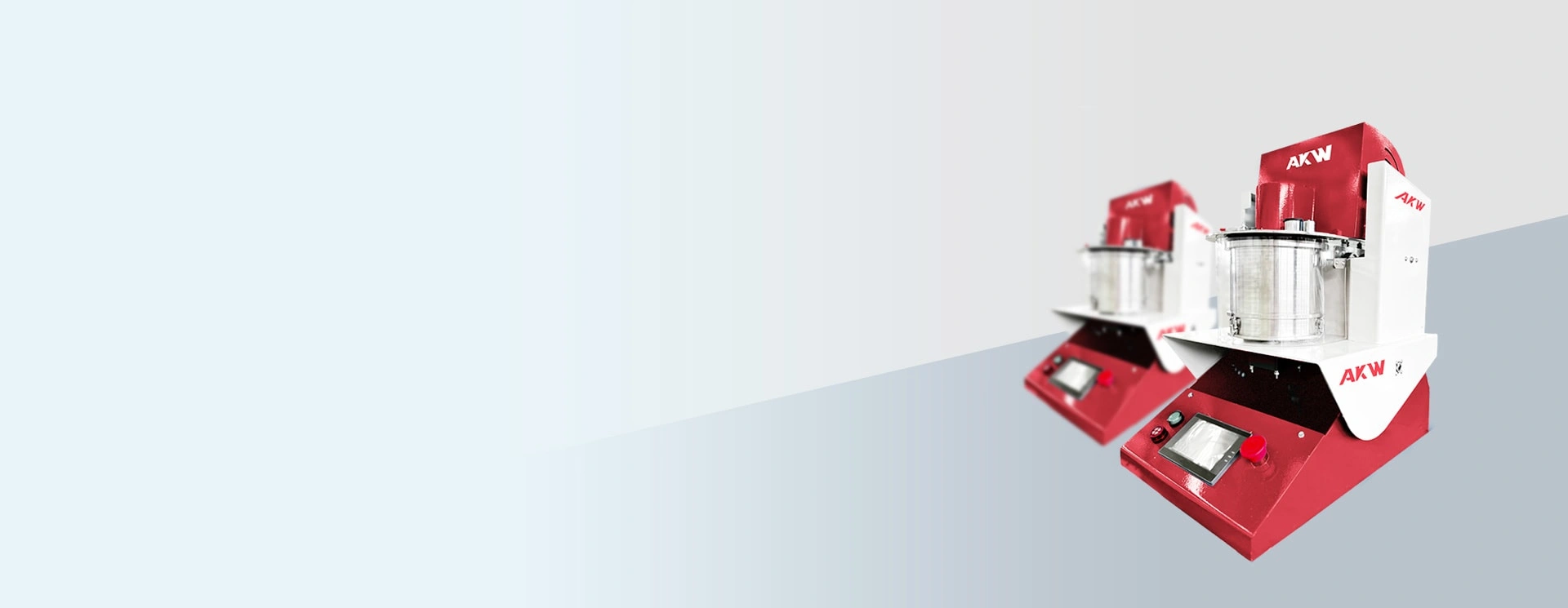
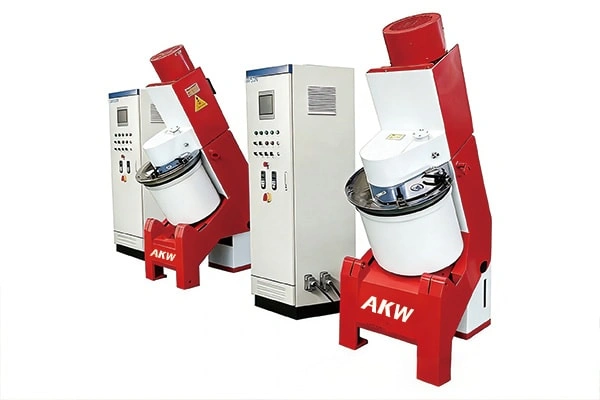
As core equipment in industries such as refractory materials, lithium-ion batteries, ceramics, concrete, and pharmaceuticals, AKW intensive mixers have become an important guarantee for efficient production in various industries due to their excellent mixing performance. These industries have strict requirements for the mixing uniformity, production efficiency, and material compatibility of intensive mixers. When choosing an AKW intensive mixer, it is even more necessary to ask precise questions to ensure that the equipment meets your production needs, budget, and long-term operational goals. Below are 9 key questions you need to ask AKW suppliers when purchasing an AKW intensive mixer to help you select a highly suitable equipment.
1. What materials is this AKW intensive mixer designed to handle?
AKW intensive mixers are professionally designed for specific types of materials, including dry powders, wet pastes, granular materials, wear-resistant refractory aggregates, battery electrode materials, and more. When purchasing, you need to confirm with the AKW supplier whether this equipment is compatible with your raw materials, including the particle size, density, moisture content, and abrasiveness of the materials. For special application scenarios such as lithium battery cathode and anode materials, it is even more important to verify whether this equipment can effectively prevent cross-contamination and meet the strict purity standards of the industry, ensuring that it is highly compatible with your production materials.
2. What is the mixing capacity and batch size of this AKW intensive mixer model?
As a well-known manufacturer of intensive mixers in the industry, AKW has a complete range of capacity specifications for various models of equipment. It is necessary to clarify the **rated batch volume** (calculated by weight or volume) and the actual effective mixing capacity of this model to ensure that it matches your production throughput requirements (such as hourly/daily output). At the same time, ask about the single mixing cycle time of this equipment to calculate the overall production efficiency, and confirm whether this model can be scaled up or down according to future production needs to ensure the long-term use value of the equipment.
3. What mixing mechanism and technical features does the AKW intensive mixer adopt?
With advanced technological R&D capabilities, AKW intensive mixers adopt a variety of mature mixing principles, including **planetary mixing**, **turbulent mixing**, **counter-rotating paddle mixing**, or **high-shear mixing**. You need to ask the AKW supplier about the core mixing mechanism of this intensive mixer, the design of the mixing paddles/impellers, and the exclusive additional features of AKW (such as vacuum mixing systems for degassing, heating/cooling jackets for temperature-sensitive materials, forced feeding systems, etc.). The advanced technical features of AKW intensive mixers are the core advantages to ensure mixing uniformity and product quality, and also the key to distinguishing them from ordinary intensive mixers.
4. How does the AKW intensive mixer ensure mixing uniformity and consistency?
Mixing uniformity is the core performance indicator of AKW intensive mixers and the core competitiveness of the AKW brand in the industry. You can ask the AKW supplier to provide technical data (such as the coefficient of variation of material components after mixing) and authoritative test reports for the target materials to intuitively understand the mixing effect of the AKW intensive mixer. For industries with strict quality control such as pharmaceuticals and lithium batteries, it is necessary to confirm whether the AKW intensive mixer can achieve stable and consistent mixing results across all batches in small-batch, high-precision production to ensure that the quality of the produced products meets the standards.
5. Can the AKW intensive mixer be customized for specific production needs?
Each production line has unique production needs. As a professional manufacturer of intensive mixers, AKW can provide personalized customization services according to customer needs. You need to ask the AKW supplier whether this AKW intensive mixer can be customized, including structural modifications, material upgrades (such as 316L stainless steel for the food/pharmaceutical industry, wear-resistant alloys for wear-resistant materials), and control system adjustments (such as PLC touch screens, remote monitoring systems), to ensure that the AKW intensive mixer can perfectly adapt to your production line and exert maximum production efficiency.
6. What are the specifications and main materials of the AKW intensive mixer?
When purchasing an AKW intensive mixer, you need to ask in detail about the core parameters of the equipment: dimensions, weight, power consumption, and the materials of the core components (mixing tank, paddles, mixing shaft, and housing). AKW intensive mixers adopt differentiated high-quality materials according to the needs of different industries. For wear-resistant materials such as refractory aggregates, AKW intensive mixers are usually equipped with wear-resistant coatings or replaceable wear parts to effectively extend the service life of the equipment. For the food/medical industry, it is necessary to confirm whether the AKW intensive mixer complies with hygiene standards (such as FDA, GMP certifications) and has an easy-to-clean design (CIP/SIP cleaning systems) to meet industry compliance requirements.
7. What is the after-sales service and warranty policy of the AKW intensive mixer?
AKW intensive mixers are heavy-duty production equipment, and reliable after-sales support is the guarantee for the long-term stable operation of the equipment, as well as the core service advantage of the AKW brand. You need to ask the AKW supplier:
-
Warranty period (standard and extended warranty policies for core components such as motors and bearings);
-
On-site installation, commissioning, and professional operator training services provided by AKW;
-
Response time for AKW spare parts supply and technical support, and on-site maintenance services;
-
Regular maintenance plans and recommended maintenance cycles recommended by AKW to reduce equipment downtime and improve production efficiency.
8. What is the total cost of ownership (TCO) of the AKW intensive mixer? Does it include installation and operation costs?
When purchasing an AKW intensive mixer, do not only focus on the upfront purchase price, but also comprehensively evaluate the long-term use cost. Ask the AKW supplier to provide a detailed breakdown of the **total cost of ownership**, including:
-
Transportation and installation costs;
-
Energy consumption during operation (electricity, water, gas);
-
Maintenance costs (wear parts, regular maintenance);
-
Service life and potential residual value of the AKW intensive mixer.
This helps you comprehensively evaluate the long-term economic benefits of the AKW intensive mixer and select a more cost-effective AKW intensive mixer model.
9. Does the AKW supplier have relevant industry certifications and practical application cases of intensive mixers?
As a professional manufacturer of intensive mixers, AKW has complete industry qualifications and rich industry application experience. When purchasing, you need to verify the qualifications of the AKW supplier: industry certifications (ISO, CE, etc.), certificates of compliance with local safety and environmental regulations, and experience in your industry (such as refractory materials, lithium battery manufacturing). Ask the AKW supplier to provide real application cases of AKW intensive mixers, customer references, and on-site visit opportunities to intuitively evaluate the operation effect of the AKW intensive mixer in the actual production environment. Choosing an AKW supplier with mature industry experience can ensure that you obtain a reliable and customized AKW intensive mixer solution and select high-quality equipment suitable for your production needs.