
Can Intensive Mixer process high-viscosity paste materials?
Yes, the high-shear structure of the Intensive Mixer can easily handle high-viscosity pastes, slurries, and sticky materials without agglomeration. AKW’s Intensive Mixers are equipped with high-torque drive systems, which can effectively mix high-viscosity materials and ensure uniform mixing without agglomeration.
How does Intensive Mixer benefit mining and metallurgy applications?
In mining and metallurgy, the Intensive Mixer improves pellet quality, ore uniformity, and sintering efficiency, enhancing overall metallurgical performance. AKW’s Intensive Mixers are suitable for foundry sand and metallurgical sintering, with strong wear resistance and adjustable mixing intensity, which can meet the needs of different mining and metallurgy scenarios.
Why use Intensive Mixer in fertilizer and granulation production?
The Intensive Mixer supports uniform mixing and granulation of compound fertilizers, organic fertilizers, and controlled-release fertilizers, improving particle strength and nutrient distribution. AKW’s Intensive Mixers integrate mixing and granulation functions, which can realize mixing, kneading, granulation, and balling in the same equipment, with 100% balling rate and high particle strength.
What advantages does Intensive Mixer have in rubber and plastic processing?
The Intensive Mixer provides strong shearing for rubber mixing and plastic masterbatch production, improving dispersion and reducing mixing time compared to traditional equipment. AKW’s Intensive Mixers can replace part of Banbury mixers, with higher mixing efficiency and lower energy consumption, which are widely used in rubber and plastic processing industries.
Can Intensive Mixer be used in food and pharmaceutical industries?
Yes, food-grade and GMP-compliant Intensive Mixers made of 316L stainless steel are used for food additives, protein powder, chocolate, and pharmaceutical granules. AKW can customize GMP-compliant Intensive Mixers for food and pharmaceutical industries, with mirror polishing, CIP/SIP cleaning functions, and no dead corners to meet FDA and GMP standards.
How is Intensive Mixer applied in environmental protection and solid waste treatment?
The Intensive Mixer is used for fly ash solidification, sludge treatment, soil remediation, and hazardous waste stabilization, improving treatment efficiency and reducing additive consumption. AKW provides environmental protection-specific Intensive Mixers, which can handle high-humidity sludge and hazardous waste, and realize uniform mixing of solid waste and curing agents to meet environmental protection treatment standards.
Is Intensive Mixer suitable for chemical pigment and dye production?
Yes, the Intensive Mixer achieves high dispersion for pigments, dyes, and masterbatches, ensuring bright color and consistent quality in chemical products. AKW’s Intensive Mixers adopt modular design, which is easy to clean and maintain, avoiding cross-contamination between different batches of chemical materials.
Can Intensive Mixer be used in building materials and concrete industry?
Yes, the Intensive Mixer is widely used for dry-mixed mortar, concrete admixtures, lightweight blocks, and thermal insulation materials to improve material consistency and strength. AKW also produces planetary concrete mixers, which cooperate with Intensive Mixers to achieve 360-degree mixing without dead ends, and are widely used in UHPC and other high-performance concrete production.
What role does Intensive Mixer play in lithium battery material production?
In lithium-ion battery production, the Intensive Mixer guarantees ultra-high uniformity of cathode and anode materials, reduces metal contamination, and supports stable battery performance. AKW’s lithium battery-specific Intensive Mixers are equipped with vacuum technology (vacuum degree -0.08~-0.095MPa), which can realize degassing and anti-oxidation mixing, and avoid metal contamination to ensure battery safety.
Why is Intensive Mixer suitable for ceramic raw material processing?
The Intensive Mixer ensures even distribution of ceramic powders and additives, reduces defects, and improves sintering quality for daily ceramics, electronic ceramics, and advanced ceramics. AKW provides ceramic-specific Intensive Mixers, which can realize uniform mixing of ceramic raw materials and additives, and cooperate with heating/cooling technology to further improve ceramic product quality.
Why choose Intensive Mixer for refractory materials?
Refractory material production requires high uniformity. The Intensive Mixer prevents graphite agglomeration, improves green strength, and ensures stable product performance, making it essential for magnesia carbon bricks and castables. AKW has rich experience in refractory mixing, and its refractory-specific Intensive Mixers have strong wear resistance and stable performance, which are widely used in refractory material production.
What sealing performance does an Intensive Mixer have?
The Intensive Mixer uses mechanical seal and labyrinth seal to achieve almost zero dust leakage, meeting environmental protection requirements for industrial production. AKW’s Intensive Mixers adopt multi-stage labyrinth and mechanical seal combination, which can completely prevent dust leakage, protect the working environment, and meet clean production standards.
What discharge methods do Intensive Mixers adopt?
Common discharge methods for Intensive Mixers include hydraulic tilting discharge, bottom gate discharge, and full-open discharge, all designed for low residue and fast discharging. AKW’s Intensive Mixers are equipped with adjustable discharge devices, which can realize precise control of discharge speed and reduce material residue to the greatest extent.
How long does one mixing cycle take in an Intensive Mixer?
A typical mixing cycle of an Intensive Mixer is only 1–3 minutes, which is 40%–60% shorter than traditional mixers, greatly improving production efficiency. AKW‘s Intensive Mixers adopt optimized mixing technology, and the mixing time can be adjusted between 60s and 180s according to material characteristics, further improving production efficiency.
What are the types of Intensive Mixers?
Intensive Mixers are mainly divided into batch intensive mixers and continuous intensive mixers, as well as inclined intensive mixers and horizontal intensive mixers according to structure. AKW provides two main series of Intensive Mixers: EL series laboratory mixers (1-10L) and R series mixers (5-7000L), including batch, continuous, and vacuum types to meet different production needs.
What are the main components of an Intensive Mixer?
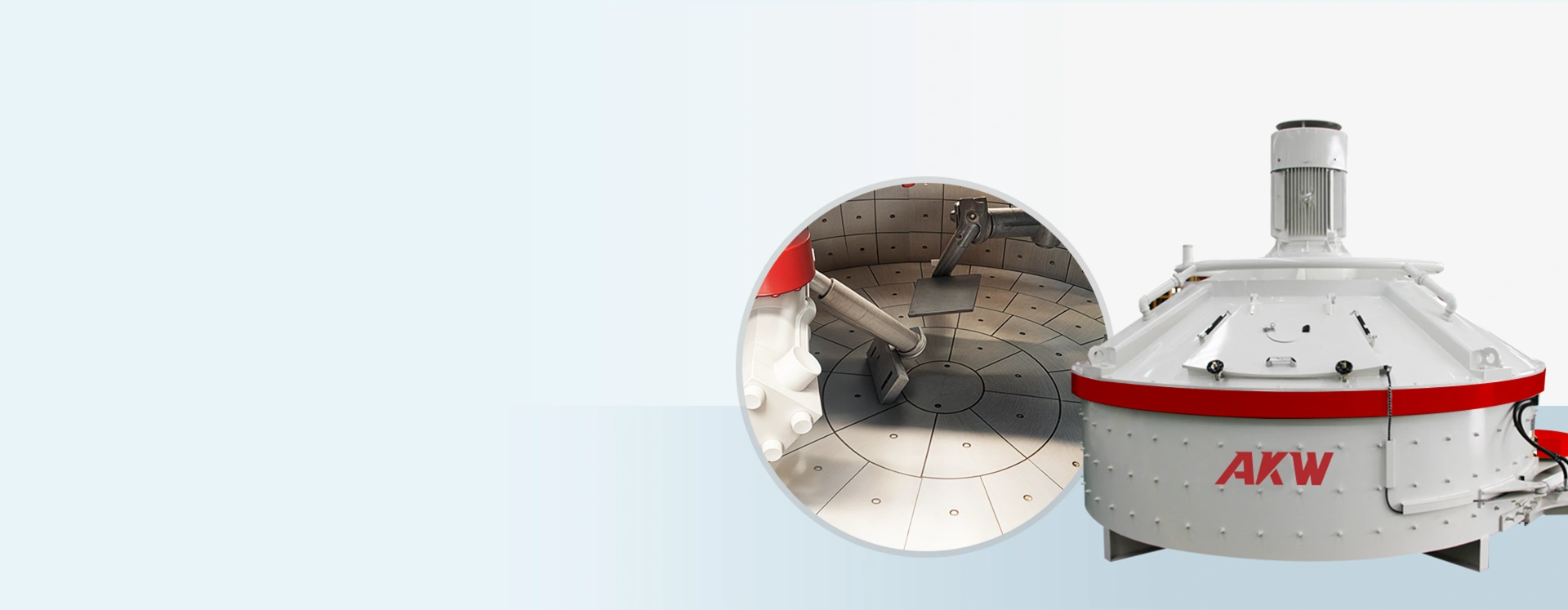
Main components of an Intensive Mixer include mixing drum, high-speed rotor, scraper, driving system, control system, heating/cooling jacket, sealing system, and discharge device. AKW Intensive Mixers are equipped with "L" type inner wall and chassis scraper, which can realize self-cleaning and ensure 100% material participation in mixing, and the rotor is made of wear-resistant alloy to extend service life.
What is the mixing uniformity of an Intensive Mixer?
The Intensive Mixer achieves a CV value (uniformity) usually below 1.5%, and high-end models can reach 0.3%–0.5%, far better than traditional mixing equipment. AKW’s Intensive Mixers adopt unique multi-axis paddle structure, and the mixing uniformity CV value can reach more than 98%, ensuring consistent material ratio in each batch.
What materials can an Intensive Mixer handle?
An Intensive Mixer can handle powder, granules, fibers, slurry, paste, liquid-solid mixtures, and high-viscosity materials, making it highly versatile for industrial production. AKW’s Intensive Mixers are specially designed to handle abrasive, corrosive, and high-viscosity materials, and can also process foundry sand, friction materials, and magnetic materials with excellent performance.
What is the difference between Intensive Mixer and ordinary mixer?
The Intensive Mixer provides high shear force and ultra-high uniformity, while ordinary mixers only rely on low-shear convection. Compared with ordinary mixers, AKW's Intensive Mixers have shorter mixing time, higher efficiency (5 times higher than traditional equipment), and can realize mixing, granulation, and coating in a single machine, which is more suitable for difficult-to-mix materials.
What industries are Intensive Mixers mainly used in?
Intensive Mixers are widely used in refractory materials, ceramics, lithium battery materials, building materials, chemicals, environmental protection, food, pharmaceuticals, and mining industries due to their high mixing precision and efficiency. AKW specializes in providing Intensive Mixer solutions for these industries, including refractory mixers, glass mixers, lithium-ion battery mixers, and UHPC mixers, covering almost all industrial mixing scenarios.
What is an Intensive Mixer and what is its working principle?
An Intensive Mixer is a high-shear mixing machine that uses high-speed rotor and counterflow to achieve fast, uniform mixing of powder, granule, and paste materials. AKW公司 (AKW Technology) designs Intensive Mixers based on 3D mixing technology and counter-current mixing principle, which ensures 100% of materials participate in mixing without dead ends, and its working principle relies on strong shear force, turbulence, and three-dimensional movement to ensure high mixing homogeneity even for difficult materials.
How do I choose the right mixer model for my needs?
Please provide the following information, and our engineers will recommend a model for you: Material characteristics (viscosity, density, corrosiveness, etc.) Batch size Production process requirements (such as mixing accuracy, time, temperature control, etc.) Installation environment limitations (such as power supply, space)
Does the intensive mixer support vacuum or inert gas protection?
Customizable vacuum or nitrogen purging systems are available to prevent material oxidation or volatile residue, suitable for sensitive materials.
What are the key maintenance points for an intensive mixer?
Regularly inspect the seals and rotor for wear. Clean out residual material from the mixing chamber. Lubricate the drive components. We provide a detailed maintenance manual and a list of wear parts.
What are the differences between a planetary mixer and a conventional forced mixer?
Planetary mixers achieve thorough mixing without dead zones through planetary motion involving both revolution and rotation. They are particularly suitable for concrete, mortar, refractory castables, and other materials requiring high uniformity, and their mixing effect is superior to traditional forced mixers.


Copyright © 2026 by Qingdao AKW Technology Co.,Ltd. All Rights Reserved
Privacy Policy